
Mercy Charity has provided finance for building fresh water well for dozens of tribal villagers in Dac Lac, Song Be, Quy Nhon and other locations in Central Vietnam.
Mercy Charity has focused on the children of leprosy-affected families in tribal villages. Through the local Sisters of St. Paul, we provide financial assistance to supply books, food, and education for the children, as well as transportation to school.
How much are the suffers that the Lepers endured?
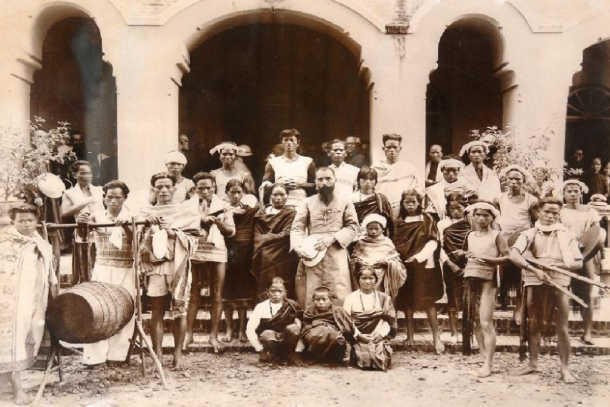
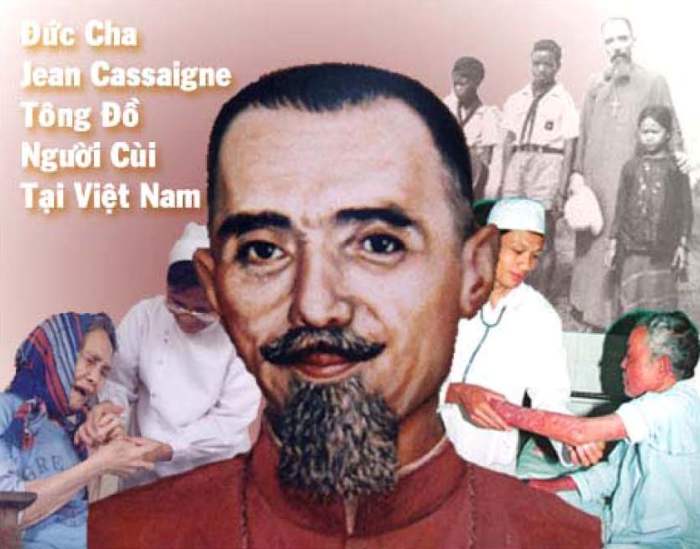
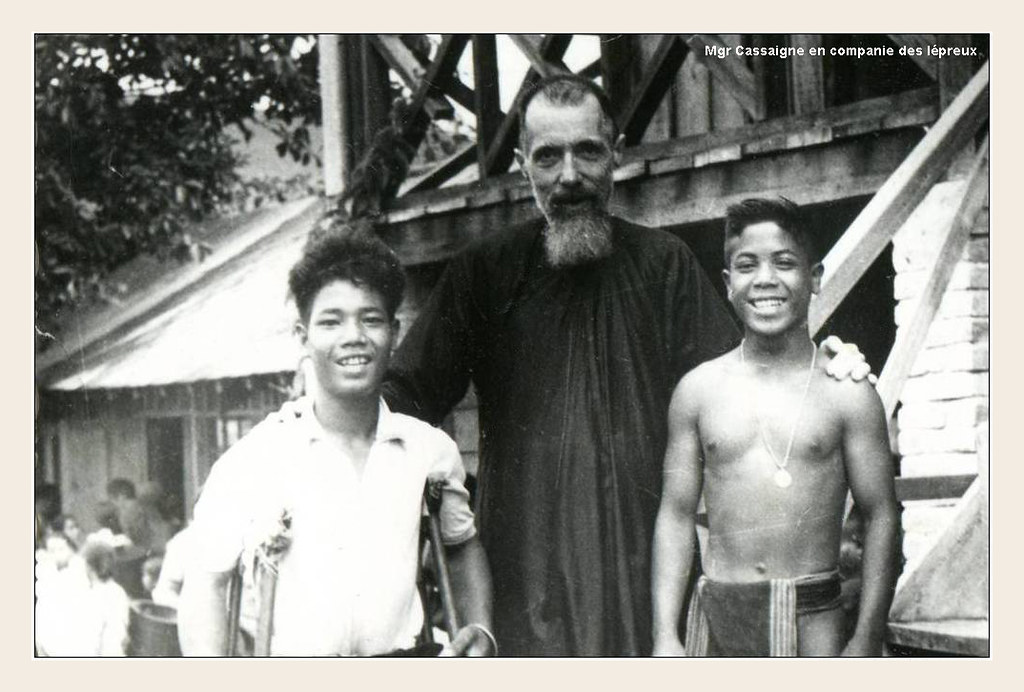
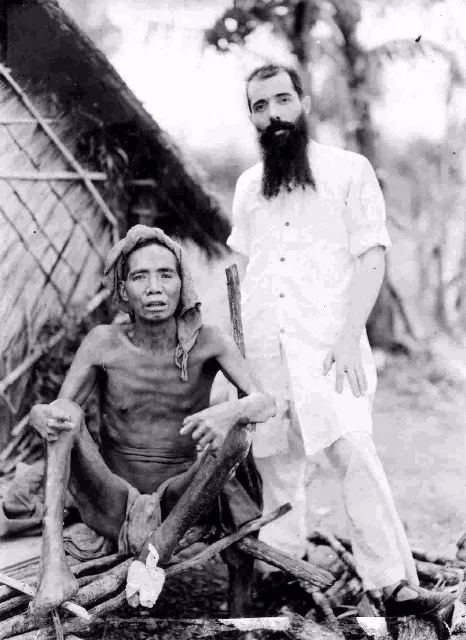

BISHOP CASSAIGNE: A life of sacrifice for the leper village in Di Linh
** Crying in the Forest
Next to the Leper Village of Di-Linh, Lam Dong province, there is the tomb of Bishop Jean Cassaigne (Gioan Sanh), founder of the parish and leper village in Di-Linh. On the tombstone of Bishop De Cassaigne, the following two lines are engraved:
“I ask those who, while alive, I could not help, please forgive me”
Right after Bishop Jean Cassaigne ordained Father Simon Hoa Hien (former Bishop of Da Lat Diocese) in 1955, instead of returning to France where Bishop Cassainge grew up, he returned to live happily with the leper colony patients, a small village that he had founded with his own hands several decades before.
In this small village, he was a parish priest, preacher, director, nurse, taking good care of all patients of all religions, young and old, with the enthusiastic cooperation of the Sisters of Charity of Vincent de Paul. He was determined to live and die with his leper children
In the book “Optimism in the Highlands” written in haste by Father Giuse Phung Thanh Quang in 1972 about Bishop Cassaigne’s life of sacrifice for the lepers, when Bishop Cassaigne was writhing in terrible pain at the end of his life. A truly noble life of sacrifice by Bishop Cassaigne that perhaps very few people know and remember today.
Father Cassaigne was ordained a priest in 1925 at the Rue du Bac seminary in Paris. He went to Saigon right after that and received the pilot missionary assignment in the sacred and poisonous land of Di Linh (DJIRING) in 1927.
He loved the “Lepers” so much that he lived among the lepers, bathed and cared for them, and loved them until they died. Father Cassaigne told a story about how he once helped lepers with food including rice, salt, and venison.
There was a leper who came to get her weekly food, but that week she did not come. Father Cassaigne went to her hut to find her and found her dying with slimy pus and an unbearable stench coming from her pitiful, withered body. He quickly taught her about God and asked her if she wanted him to wash away her sins so that she could go to Heaven after she died. The poor leper agreed to be baptized and said to Father Cassaigne:
“Cau dông! Ăn rốp kăh ứh mê đát ăn gũh re hồ trố”
”Oh, my lord! I will remember you when I am in Heaven”
The pitiful but good death of the leper lady deeply moved the apostolic soul of the Missionary Priest. The words “I will remember you when I am in Heaven” were the first stone laid to start the establishment of a leper village in Di Linh.
During that time, in the Central region as well as in the South of Vietnam, there were also leper camps with a relatively small number of patients. While in remote areas there were hundreds of lepers, there was no place for them to live. According to Father Phung Thanh Quang.
One day in late Autumn 1928, during a trip to a remote village, while crossing the deserted forest, suddenly there were many footsteps coming from the dark, many voices screaming for him to stop. The strange figures appeared like a group of hungry ghosts. Their bodies were emaciated, some had lost arms, some had broken noses, their mouths were dripping with water, and all were almost crippled. Although some were limping, some were crawling, and some were hungry, they tried to chase after the Father, surrounded Him, and all cried out in unison:
“Oh cau duong! Oh cau duong! Dan nđắc sơngit bol hi!”
Oh big man! Oh big man! Have mercy on us!
Then they all prostrated themselves before Him and cried loudly. Father Cassaingne was both afraid and moved. It turned out that this was a group of lepers who had been driven away by the disgust of their village. They gathered in groups in the faraway forest, living day by day, waiting to die. Perhaps they had heard rumors about this big man who made medicine and often helped lepers. They waited for the Father on the deserted road to ask for his help. A few days later, the establishment of the Di Linh leper village was immediately promoted.
Father Cassaigne’s presentation in Saigon in 1943 about how terrible leprosy was, he wrote:
“In the Highlands as well as in most tropical countries, where cleanliness and hygiene are not paid much attention, the number of people with leprosy is quite high. When they can still work, lepers can still live with their families. But when their bodies are exhausted and they can no longer do anything, especially when the rotten sores begin to break open, pus and blood are everywhere, making the people around them feel disgusted and unbearable, the villagers take them into the forest, build them a thatched hut and leave them there alone to live or die! Then, weak and lonely in the deserted hut, the lepers no longer have the strength to do anything to earn a living because their arms and legs are amputated! They will slowly die a miserable death, will collapse in some corner and die of hunger and cold, without anyone knowing…”
Due to his harsh life in the jungle, the Bishop endured many serious illnesses.
In 1929, he contracted malaria. In 1943, he developed leprosy from living close to the sick. In 1957, he suffered from incurable bone tuberculosis, and in 1964, pulmonary tuberculosis returned to torment him. Despite the severe physical pain, the Bishop steadfastly accepted his suffering, praying for God to have mercy and reduce the pain of the lepers in Vietnam. Those fortunate enough to live near the Bishop often heard him say:
“I have only three wishes in my life: to endure, to suffer, and to die here, among my Montagnards.” (Je ne demande que trois choses: to endure, to suffer, and to die here, among my Montagnards).